Most creators don’t realize how tense they’ve become.
Not anxious in an obvious way. Not panicked or overwhelmed all the time. Just… slightly braced. Slightly guarded. Slightly on edge, even when things are going “well.”
They’ve learned to live with that feeling. They assume it’s part of being online. Part of being ambitious. Part of wanting to make something of themselves.
But it isn’t.
It’s a symptom of an environment that never lets people fully relax.
The Subtle Cost of Always Being “On”
When creators spend enough time in public-facing spaces, a quiet shift happens.
They start to narrate themselves internally.
They rehearse responses before they speak.
They feel a low-grade pressure to be interesting, useful, or impressive—even in casual moments.
None of this feels dramatic. It just feels normal.
Until it doesn’t.
That constant self-monitoring takes energy. It fragments attention. It makes even simple creative acts feel heavier than they should. Over time, it erodes the sense that making things is supposed to be enjoyable.
Creators don’t stop working.
They stop exhaling.
What “Normal” Actually Feels Like
Feeling normal doesn’t mean losing ambition or lowering standards.
It means:
- not scanning for judgment
- not optimizing every interaction
- not turning every thought into content
- not measuring your worth in response metrics
Normal feels grounded. It feels like you’re inside your body again instead of hovering above it, watching yourself perform.
When creators feel normal, they:
- think more clearly
- take better risks
- make fewer reactive decisions
- enjoy the process again
The work improves—not because they’re pushing harder, but because they’re finally present.
Why This Almost Never Happens Online
Most online environments are not designed for normalcy.
They reward speed, certainty, and volume. They amplify extremes. They blur the line between conversation and broadcasting. They quietly encourage comparison—even when no one says it out loud.
In those conditions, calm becomes invisible. Thoughtfulness feels slow. Humor gets flattened. People start mistaking intensity for seriousness.
Over time, creators internalize this as a personal failing.
“If I were better, this wouldn’t feel so draining.”
“If I were stronger, I’d keep up.”
“If I were more disciplined, I wouldn’t need a break.”
But the problem isn’t internal.
It’s architectural.
What Changes When the Pressure Drops
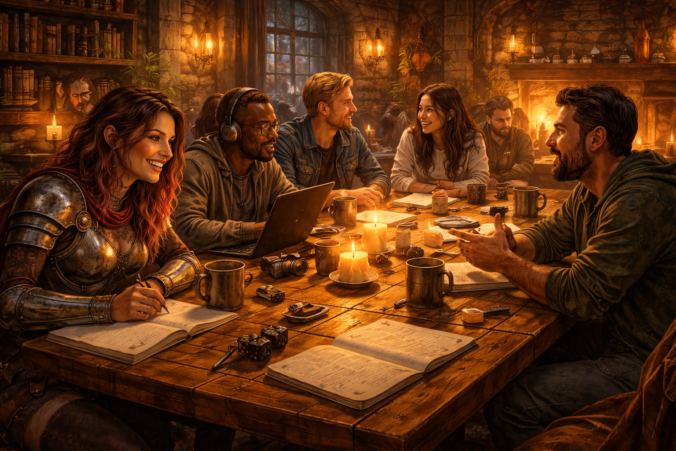
Put creators in a room that doesn’t demand constant output, and something almost immediate happens.
They start speaking more honestly.
They ask better questions.
They admit uncertainty without embarrassment.
They listen instead of waiting for their turn.
The pace slows—but the signal sharpens.
Ideas that would have been rushed in a feed get explored. Projects that would have been abandoned get finished. People stop copying what’s loud and start trusting what feels right.
Normalcy isn’t stagnation.
It’s the condition that allows depth.
Why This Leads to Better Work (and Better Lives)
When creators feel normal, they make different choices.
They:
- choose sustainability over spikes
- build systems instead of chasing hacks
- value ownership over attention
- protect their energy instead of burning it for visibility
This doesn’t make them less ambitious.
It makes them more durable.
And durability is what allows creative lives to compound over time—financially, artistically, and socially.
The Quiet Effect of a Good Room
Good rooms don’t motivate people.
They remove friction.
They don’t tell you to be better. They make it easier to be yourself. They don’t push you to post more. They make you want to return.
Over time, this has a powerful effect.
Creators who feel normal show up more consistently—not because they’re forcing themselves, but because the space feels worth re-entering. They stay longer. They help others. They build trust without trying to.
That’s how communities stop being exhausting and start being nourishing.
Why da Vinci’s Gathering Cares About This
da Vinci’s Gathering isn’t trying to turn creators into machines.
It’s trying to give them their nervous systems back.
It’s a room where:
- you don’t have to perform
- you don’t have to compete
- you don’t have to be “on” all the time
- you don’t have to justify slowing down
From that place, work becomes clearer. Money becomes calmer. Ambition becomes less frantic and more intentional.
Normalcy isn’t the enemy of progress.
It’s the foundation of it.
A Different Kind of Success
There’s a version of success that looks impressive and feels miserable.
And there’s another version that looks quieter and feels sustainable.
The difference often isn’t talent, discipline, or intelligence.
It’s environment.
Creators who feel normal don’t burn out as easily. They don’t chase every trend. They don’t confuse attention with meaning. They build lives that can actually hold the work they want to do.
That’s the kind of success we care about here.
The Room After the Noise
If you’ve been feeling subtly exhausted by the internet—by the pace, the pressure, the performance—you’re not broken.
You’re responding appropriately to an environment that never shuts up.
Sometimes the most radical thing a creator can do is step into a quieter room and remember what it feels like to be normal again.
That’s what da Vinci’s Gathering is here for.
Not to fix you.
Just to give you a place where you don’t need fixing in the first place.